
IDEC (Indirect-Direct Evaporative Cooling) for UAE Industries
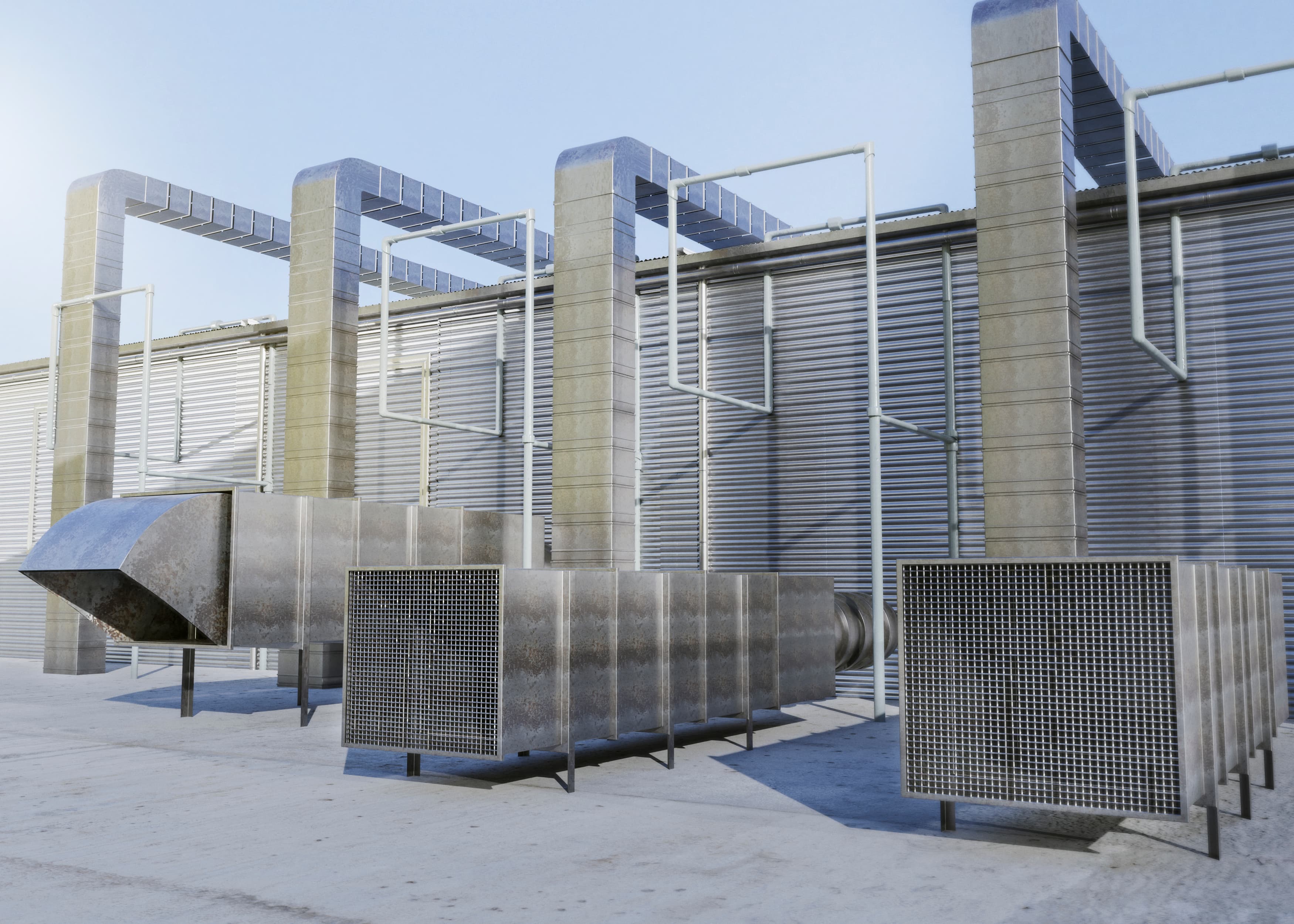
Cooling a large production hall or warehouse in the UAE with expensive mechanical air conditioning on an industrial scale can be one of the biggest line items on a facility's electricity bill, with cooling alone estimated to drive over 70% of total building energy use in the UAE. IDEC, or Indirect-Direct Evaporative Cooling, one of our core industrial cooling solutions, offers UAE manufacturers, food processors, and pharmaceutical facilities a way to cut that cost dramatically while actually improving indoor air quality. Here's what it is, how it works, and why it's gaining ground across the region.
What Is IDEC (Indirect-Direct Evaporative Cooling)?
IDEC is a two-stage form of evaporative (also called adiabatic) cooling. Rather than using chemical refrigerants and compressors like a conventional AC system, it cools air using the natural evaporation of water — the same principle behind why you feel cold stepping out of a swimming pool. Because it relies on a physical process rather than mechanical refrigeration, IDEC systems typically use only around 10% of the energy that traditional mechanical cooling requires for a comparable temperature drop.
How Does Two-Stage Evaporative Cooling Work?
IDEC systems cool air in two distinct stages:
- Stage 1 — Indirect cooling: Incoming fresh air is pre-cooled using cold recirculated water, without adding any moisture to the air itself. This keeps humidity low going into the second stage.
- Stage 2 — Direct cooling: The pre-cooled air passes through a second stage where controlled moisture is added, cooling it further while still keeping final humidity levels manageable a key difference from single-stage evaporative coolers, which tend to leave air feeling damp.
The result is air that's significantly cooler than the outdoor temperature, delivered as 100% fresh, filtered outside air, not recirculated indoor air that's been cooled repeatedly.
Direct vs. Indirect vs. Indirect-Direct Cooling
| Type | How It Works | Best For |
|---|---|---|
| Direct adiabatic cooling | Air passes straight through water-wetted pads | Dry climates, lower humidity sensitivity |
| Indirect adiabatic cooling | Air is cooled without adding moisture | Humidity-sensitive environments |
| Indirect-Direct (IDEC) | Combines both stages for deeper cooling with controlled humidity | Large production halls, food & pharma facilities |
IDEC vs. Traditional Mechanical Cooling
| Feature | Mechanical Cooling (AC) | IDEC (Indirect-Direct Evaporative) |
|---|---|---|
| Energy use | 100% (baseline) | ~10% (up to 90% savings) |
| Refrigerants used | Yes, chemical | No — water only |
| Air supply | Recirculated indoor air | 100% fresh, filtered outside air |
| Indoor air quality | Moderate to poor | Excellent |
| Environmental impact | Higher (refrigerant GWP, ozone impact) | Low — no synthetic refrigerants |
Why IDEC Makes Sense for UAE Industries
- Lower operating costs in a high-electricity-cost market: With UAE industrial electricity tariffs among the factors driving up operating costs for large facilities, cutting cooling-related energy use by roughly 90% has a direct, measurable impact on the bottom line.
- Built for high-heat, low-humidity conditions: IDEC performs best in hot, dry climates, which describes UAE summers for much of the year, making it particularly well suited to the region compared to markets with consistently high ambient humidity.
- Continuous fresh air, not recirculated air: Unlike standard AC systems that recycle the same indoor air, IDEC constantly brings in and cools outside air, which matters significantly for facilities where air quality affects product safety, such as food processing and pharmaceutical production.
- Works year-round, not just in summer: With a heat reclaim module, IDEC systems can reuse indoor heat to pre-warm incoming fresh air during cooler months, keeping the system useful outside of peak summer heat as well. Our design, installation, and maintenance services cover the full lifecycle of an IDEC system, from initial sizing through ongoing upkeep.
Industries That Benefit Most from IDEC
- Food & beverage production — dairy, meat & fish processing, bakeries, breweries, confectionery, and general food manufacturing, where both temperature and air freshness affect product quality
- Pharmaceutical facilities — where clean, regulated air and consistent humidity are critical to preserving medication integrity
- Data centers — high, consistent cooling loads with a need for energy efficiency
- Manufacturing & clean rooms — where contaminant control matters as much as temperature
- Water treatment plants and other mission-critical facilities
Talk to Smart Komfort About IDEC Cooling
Smart Komfort designs IDEC systems for facilities across Dubai, Abu Dhabi, Sharjah, Ajman, Umm Al Quwain, and Ras Al Khaimah, built around each facility's heat load, humidity conditions, and air quality requirements. Get a free consultation or learn more about our IDEC evaporative cooling systems.
Frequently Asked Questions
Quick technical answers regarding industrial cooling feasibility, power consumption, and installation across the UAE.
Yes, 'evaporative cooling' and 'adiabatic cooling' describe the same underlying process: using water evaporation to lower air temperature without chemical refrigerants.
Ready to Cool Your UAE Facility Efficiently?
Smart Komfort provides complete CFD airflow simulations, factory-direct quotations, and turnkey installation across Dubai, Abu Dhabi, Sharjah, and all Northern Emirates.
